


EV chargers – at a glance
- Eligible renters and flat owners can get an EV chargepoint grant of up to £350 towards installation, provided they have private off-street parking. [1]
- Homes with off-street parking can often install a home charger under permitted development in England – but there are size limits and extra restrictions for listed buildings, conservation areas and scheduled monuments. [2]
- In Great Britain, private charge points sold for domestic use are regulated to ensure they have smart functionality (helping shift charging to lower-demand periods) and meet baseline consumer requirements. [3]
- Installing an EV charge point usually involves new electrical work in or around a dwelling – Building Regulations guidance for electrical safety in dwellings is set out in Approved Document P (England). [4]
Sources:
- [1] GOV.UK – Electric vehicle chargepoint grants
- [2] Planning Portal – Permitted development for electric vehicle chargers
- [3] GOV.UK – Regulations: electric vehicle smart charge points
- [4] GOV.UK – Electrical safety: Approved Document P
What is a home EV charger?
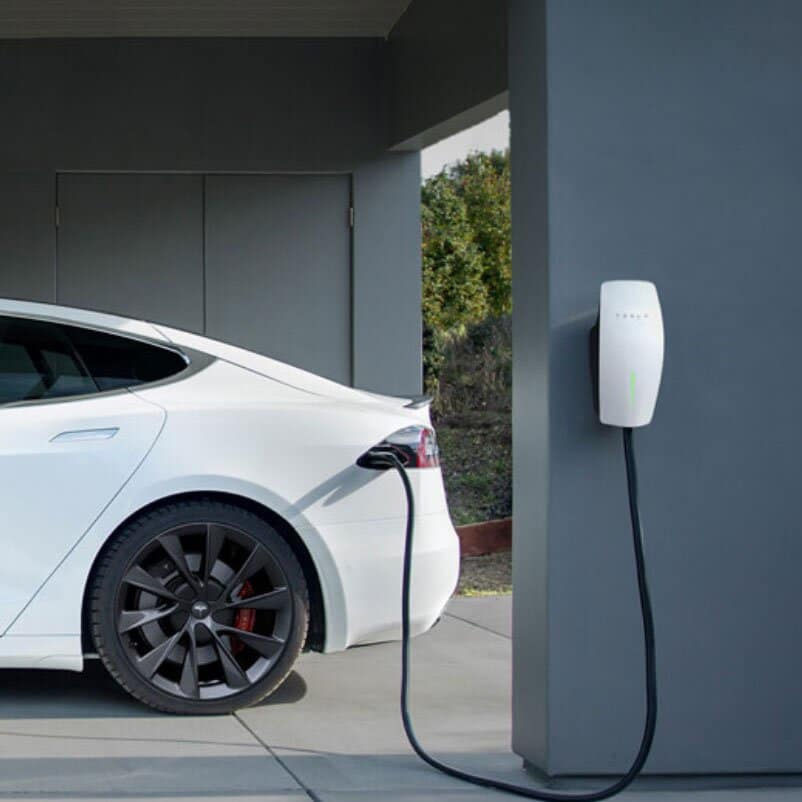
A home EV charger (sometimes called a charge point) is a dedicated unit installed on an exterior wall or a nearby mounting point. It supplies power to your vehicle safely and consistently, with built-in features designed for everyday use – such as scheduling, load management and app control on many models.
Most modern home charge points sold in Great Britain are expected to have smart functionality, which helps manage demand on the electricity system and enables off-peak scheduling. Source: GOV.UK – Smart charge point regulations
If you’re comparing options and want a clear recommendation based on your parking set-up and electrical supply, you can speak to Livwarm about EV charger installation.
Choosing the right EV charger for your home
Tethered vs untethered
Tethered chargers have a fixed cable – handy for day-to-day convenience. Untethered chargers use a detachable cable, which can look tidier and can be useful if you want flexibility between vehicles and cable types.
Smart features and tariffs
Smart scheduling can help you charge when electricity is cheaper (depending on your tariff) and when demand is lower. The government’s smart charge point regulations are designed to ensure domestic charge points support smart functionality and key consumer protections. Source: GOV.UK – Smart charge point regulations
Location and cable routing
The best location is usually the shortest, simplest cable route from your consumer unit to the charger, while still being convenient for how you park. This is one of the biggest practical drivers of cost and installation complexity.
Is your home suitable for an EV charger?
Parking
If you have off-street parking, installing a charger is often straightforward and may fall under permitted development in England (with conditions and limits). Source: Planning Portal
If you only have on-street parking, you may still have options (for example, approved cross-pavement solutions), but permissions and local requirements vary – so it’s best to check what’s available in your area. Source: GOV.UK – Chargepoint grants (including on-street grant pathway)
Electrical set-up
An EV charger is a significant electrical load, so the installer will check your consumer unit capacity, protective devices and the route for a dedicated supply cable. In England, Building Regulations guidance for electrical safety in dwellings is set out in Approved Document P. Source: GOV.UK – Approved Document P
Internet connectivity
Many smart chargers work best with a stable Wi-Fi or mobile signal. If the signal is weak where the charger will sit, you might want to consider a Wi-Fi extender or a unit that supports an alternative connection method.
Do you need planning permission for an EV charger?
In England, a home charger is often permitted development if your home has off-street parking – but there are important limits, including restrictions around listed buildings, scheduled monuments and certain protected areas. The Planning Portal sets out the key criteria and dimensions. Source: Planning Portal
If you’re unsure, a good installer will help you understand what to check before work starts – so the installation stays compliant and hassle-free.
Grants and funding – what support is available?
Grant availability depends on your situation. GOV.UK sets out multiple schemes – for example, an EV chargepoint grant of up to £350 for eligible renters and flat owners (with private off-street parking), and other pathways for landlords and some on-street solutions. Source: GOV.UK – Electric vehicle chargepoint grants
Because eligibility rules and documentation can change, it’s worth checking the current GOV.UK criteria before you plan your installation.
What affects the cost of EV charger installation?
Costs vary from home to home, but the biggest drivers tend to be the cable run length, ease of access (including any required drilling or trunking), the condition and capacity of the consumer unit, and whether additional protective devices or upgrades are needed.
If you want a clear, personalised cost estimate for your property, you can request an EV charger quote from Livwarm.
A simple journey with Livwarm
Home charging should feel straightforward. A typical journey looks like this:
- Initial chat – your vehicle, parking set-up and what you want from a charger
- Electrical checks – consumer unit capacity, protections, and cable route planning
- Charger selection – picking the best model for your needs and budget
- Installation and handover – fitting, testing, certification and showing you how to schedule charging
If you’re ready to explore your options, visit Livwarm EV charger installation for next steps – or request an EV charger quote.
EV charger FAQs
Is a home EV charger usually permitted development?
Often, yes – particularly for homes with off-street parking in England – but there are limits and exceptions (including listed buildings and certain protected areas). Source: Planning Portal
Are home chargers required to be “smart”?
In Great Britain, domestic charge points sold for private use are regulated to ensure smart functionality and key consumer requirements – GOV.UK explains what’s covered and how compliance works. Source: GOV.UK – Smart charge point regulations
Can I get a grant for a home charger?
Possibly. GOV.UK outlines grants of up to £350 for eligible renters and flat owners (and other schemes for landlords and workplaces), subject to criteria such as parking arrangements. Source: GOV.UK – Electric vehicle chargepoint grants
Do I need a qualified installer?
Because an EV charger installation typically involves new electrical work in or around a dwelling, it’s important that the work is carried out safely and appropriately. Building Regulations guidance for electrical safety in dwellings (England) is set out in Approved Document P. Source: GOV.UK – Approved Document P


