


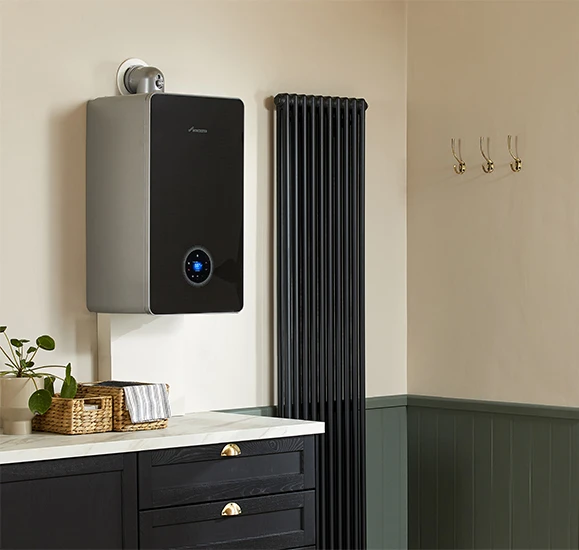
Boiler upgrades – at a glance
- Energy Saving Trust lists a typical average cost of £3,700 to replace a G-rate gas boiler with an A-rated boiler (Great Britain) – your price will vary by boiler type and installation complexity. [1]
- If you’re replacing an old boiler, building regulations specify the new one must be A-rated for energy efficiency (typically a condensing boiler). [2]
- In England, Boiler Plus standards (from April 2018) make timers and room thermostats an explicit requirement – and when a gas combi boiler is installed, an additional efficiency measure is required (such as weather compensation, load compensation, flue gas heat recovery, or qualifying smart controls). [3]
- Fitting or replacing an external flue is often permitted development, but there are conditions and extra restrictions in designated areas (and you should check if the building is listed). [4]
- HMRC guidance explains that certain energy-saving materials installations can be zero-rated between 1 May 2023 and 31 March 2027, and from 1 April 2027 revert to the reduced rate (5%) – and the list includes controls for central heating and hot water systems. [5]
Sources:
- [1] Energy Saving Trust – Boiler types explained (costs)
- [2] Centre for Sustainable Energy – Upgrading and replacing your boiler (building regulations)
- [3] UK Government – Boiler Plus factsheet (April 2018 standards)
- [4] Planning Portal – Flue, chimney or soil and vent pipe (planning permission)
- [5] HMRC – VAT on energy-saving materials and heating equipment (Notice 708/6)
What is a boiler upgrade?
A boiler upgrade usually means replacing an older, less efficient boiler with a modern A-rated condensing model – and improving the parts of the system that affect comfort, running cost and reliability. That could include better heating controls, system filtration, and getting the pipework and radiators performing properly.
If you’re at the early research stage, the boiler upgrades page explains what Livwarm can help with and how the quoting process works.
Replacement boiler vs “system improvements”
A like-for-like boiler swap is common, but it’s often worth checking whether your system needs extras to protect the new boiler and keep performance steady. For example, the Energy Saving Trust notes that building regulations encourage the use of magnetic filters to remove rust from heating water when replacing a boiler (if you don’t already have one). Source: Energy Saving Trust
How a condensing boiler works
Condensing boilers are more efficient than older non-condensing models because they extract more heat from hot exhaust gases (flue gases) that would otherwise be wasted. Source: Centre for Sustainable Energy
Choosing the right boiler type for your home
The “best” boiler depends on your hot water demand, available space, and the kind of heating system you already have. The Energy Saving Trust breaks the main options down like this. Source: Energy Saving Trust
Combi boiler
A combi boiler delivers hot water on demand (no cylinder) and is often a good fit where space is tight and hot water demand is modest. Source: Energy Saving Trust
System boiler
A system boiler works with a hot water cylinder, which can suit larger households with higher hot water demand (including multiple bathrooms). Source: Energy Saving Trust
Heat-only (regular) boiler
A heat-only (regular) boiler also uses a cylinder and typically needs more space for tanks – it’s more common in larger properties or older system layouts. Source: Energy Saving Trust
How much does a boiler upgrade cost?
Costs vary based on boiler type, output size, whether it’s a straight swap or a conversion, access and flue position, plus any recommended system improvements. As a reference point, the Energy Saving Trust lists an average cost of £3,700 (Great Britain) for replacing a G-rate gas boiler with an A-rated boiler (including thermostatic radiator valves). Source: Energy Saving Trust
The most accurate way to budget is to get a quote against your current set-up – you can request a boiler quote from Livwarm in a couple of minutes.
Heating controls and Boiler Plus
Controls make a real difference to comfort and running cost because they help you heat the home only when you need to. The UK Government’s Boiler Plus factsheet explains that, from April 2018, new standards apply in England when a boiler is installed in an existing heating system – including making timers and room thermostats an explicit requirement. Source: UK Government (Boiler Plus)
The same factsheet states that when a gas combination boiler is installed, an additional energy efficiency measure is required – with options including flue gas heat recovery, weather compensation, load compensation, or qualifying smart controls. Source: UK Government (Boiler Plus)
Planning permission and flue rules
Most boiler upgrades don’t need planning permission, but changing or adding an external flue can have conditions attached. The Planning Portal explains that fitting, altering or replacing an external flue is normally permitted development if conditions are met – and notes extra restrictions in designated areas and advice to check with the local planning authority for listed buildings or designated areas. Source: Planning Portal
VAT and boiler upgrade work
VAT depends on what’s being supplied and installed. HMRC guidance explains that certain energy-saving materials installations are covered between 1 May 2023 and 31 March 2027, and from 1 April 2027 the treatment reverts to the reduced rate (5%). The list of qualifying energy-saving materials includes controls for central heating and hot water systems. Source: HMRC (VAT Notice 708/6)
Safety, compliance and who can install a boiler
If you’re installing a gas (or LPG) boiler, the installer needs to be appropriately registered. The Energy Saving Trust advises that for gas and LPG boilers, the installer must be Gas Safe registered. Source: Energy Saving Trust
The HSE also explains that while a non-registered person may carry out “wet work” (pipes and radiators), any work on the gas boiler itself and the final connection must be done by a Gas Safe registered engineer. Source: HSE
A simple journey with Livwarm
A boiler upgrade should feel straightforward. A typical journey looks like this:
- Initial chat – your current boiler, your home, and what you want to improve
- Home survey – confirm system type, flue position, gas supply and heating layout
- Specification – boiler type and size, controls, and any recommended system protection
- Installation and handover – commissioning, safety checks, and guidance on using controls efficiently
If you’re ready to explore your options, visit Livwarm boiler upgrades – or go straight to the form to request a boiler quote.
Boiler upgrade FAQs
Do I have to fit a condensing boiler?
If you’re replacing an old boiler, building regulations specify the new one must be A-rated for energy efficiency, which will almost certainly mean a condensing boiler. Source: Centre for Sustainable Energy
How do I choose between combi, system and regular boilers?
It depends on your hot water demand, space, and the system you already have. The Energy Saving Trust outlines the differences between combi, system and heat-only boilers and where each tends to fit best. Source: Energy Saving Trust
Do I need a Gas Safe engineer?
Yes for gas (and LPG) boilers – Energy Saving Trust advises the installer must be Gas Safe registered, and the HSE explains that work on the gas boiler itself and the final connection must be done by a Gas Safe registered engineer. Source: Energy Saving Trust Source: HSE
Will I need planning permission for a boiler flue?
Often not, but there are conditions and extra restrictions in designated areas. The Planning Portal explains when flues are normally permitted development and when you should check with your local planning authority. Source: Planning Portal
Is there VAT relief for any parts of a boiler upgrade?
It depends on what’s being installed and how it’s supplied. HMRC’s VAT Notice 708/6 explains the rules for energy-saving materials (including heating controls) between 1 May 2023 and 31 March 2027, and how the position changes from 1 April 2027. Source: HMRC (VAT Notice 708/6)


